Muddy Rivers Concrete
Concrete Gas Station Construction and Repairin Blue Grass, IA and the Quad Cities
A Concrete Gas Station is a different animal than a standard commercial parking lot. The surfaces take constant traffic, fuel spills, heavy vehicle loads, and chemical exposure every single day. That combination breaks down concrete fast if it was not built to handle it. We know what this work requires, and we build accordingly.
Muddy Rivers Concrete is a veteran-owned concrete contractor based in Blue Grass, Iowa. Todd has been in the trade most of his life. Starting at age 7 working alongside his father, he served in the Army and spent years doing union commercial concrete work across multiple states before coming back to Iowa and starting this company in 2017. Commercial concrete in demanding environments is not new territory for us.
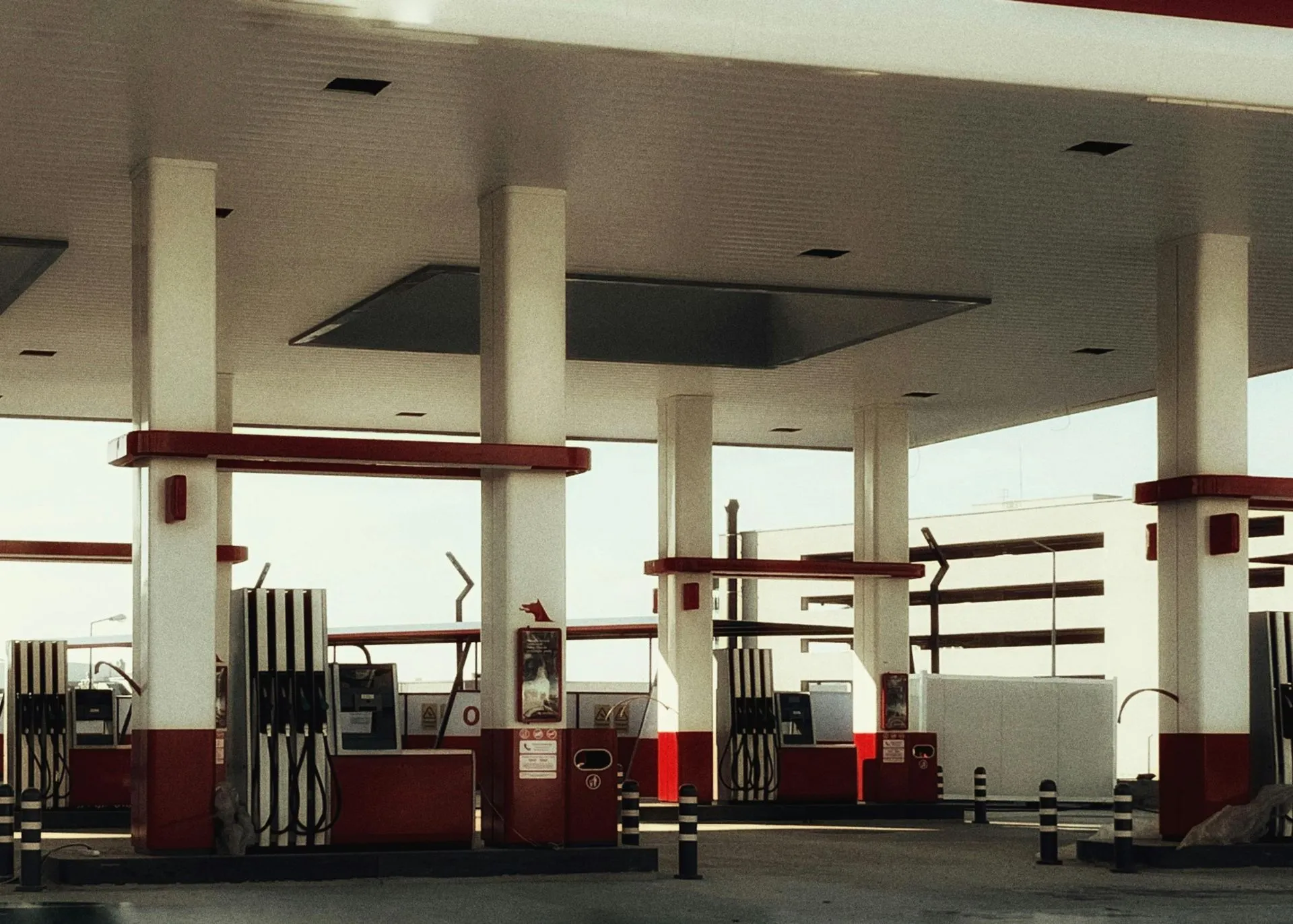
What Makes Concrete Gas Station Work Different?
Most concrete jobs require solid prep, good reinforcement, and proper finishing. Gas station concrete requires all of that and then some. The surfaces at a fuel station deal with things most commercial concrete never sees.
Fuel spills are the obvious ones. Gasoline and diesel are petroleum-based solvents. Over time, untreated or improperly sealed concrete absorbs them, and the chemical breakdown starts from the inside out. By the time the surface shows visible damage, the problem has already been developing for a while.
Add to that the weight of fuel delivery trucks making regular stops, the repetitive turning and braking of passenger vehicles at pump islands, and the freeze and thaw conditions that Iowa winters bring, and you have a surface that earns every bit of the specification it is built to.
Durable gas station concrete paving starts with the mix design, the base preparation, the reinforcement, and the sealer. Skipping steps at a gas station is not a minor issue. The consequences show up faster and cost more to fix than on almost any other commercial surface.
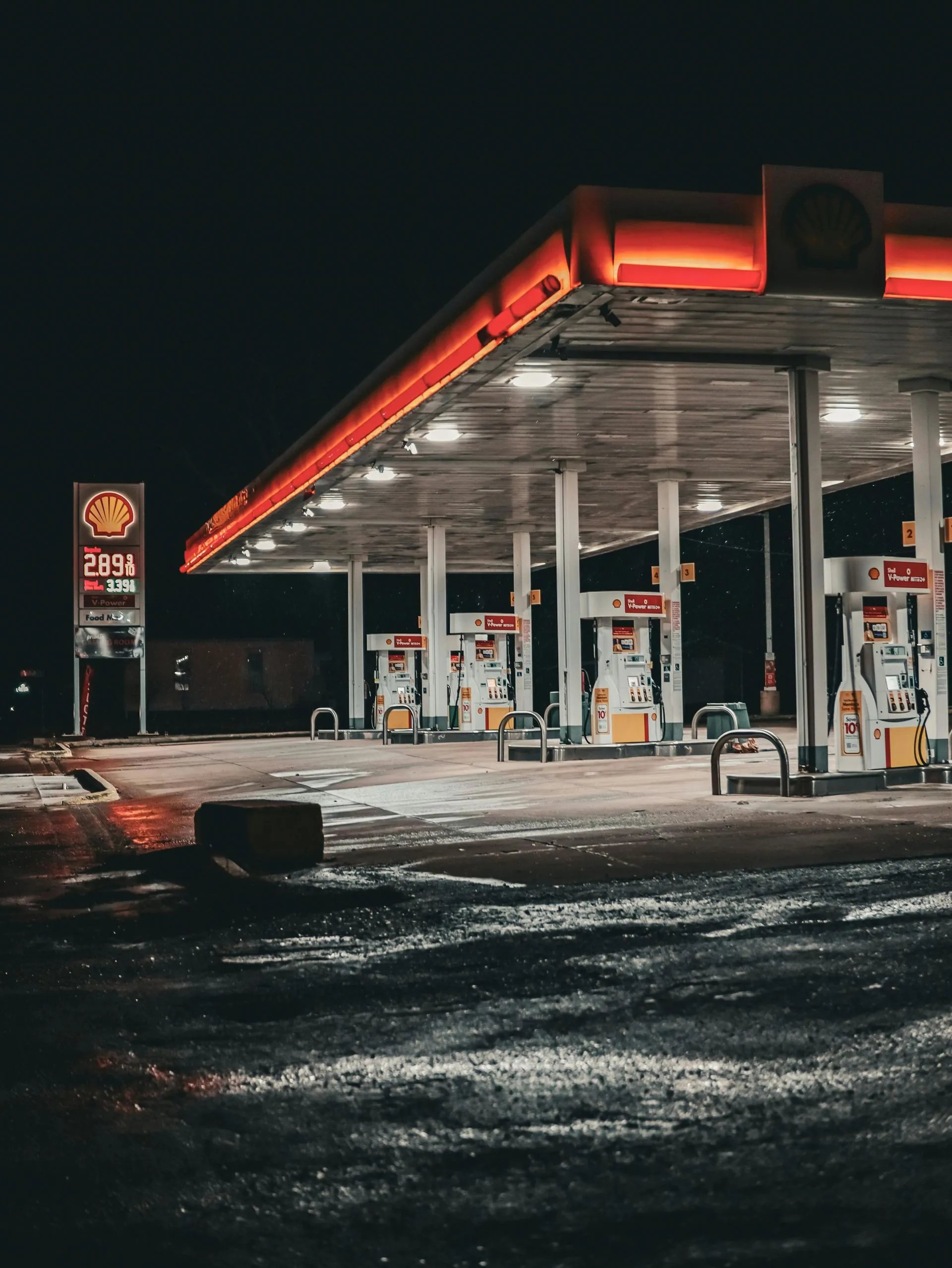
Concrete Gas Station Installation and New Construction
Concrete gas station installation involves more coordination than a standard commercial pour. The layout of the site has to account for fuel pump island concrete placement, vehicle traffic flow, delivery truck access, and drainage, all before a single form goes in.
We work through the site plan carefully before the concrete work begins. Fuel pump island concrete has specific load and layout requirements. The islands need to be positioned correctly, built to the right elevation, and reinforced to handle the repeated stress of vehicle contact and heavy equipment.
Drive lanes and approach areas at a fuel station see different traffic patterns than a standard parking lot. Vehicles stop, start, and turn in concentrated zones. The concrete in those areas needs to be built to handle that kind of localized stress without developing ruts or surface failures.
Concrete gas station construction also requires getting drainage right. Fuel and water on the same surface are a problem if the drainage is not moving liquid off the lot quickly and in the right direction. We design for drainage as part of the installation, not as a separate consideration.
Every concrete gas station installation we do is built with proper reinforcement: 1/2 inch fiberglass rebar on 2 inch chairs at 30 inch centers. We apply a salt guard sealer appropriate for fuel station environments to protect the surface from chemical exposure and freeze-thaw damage.

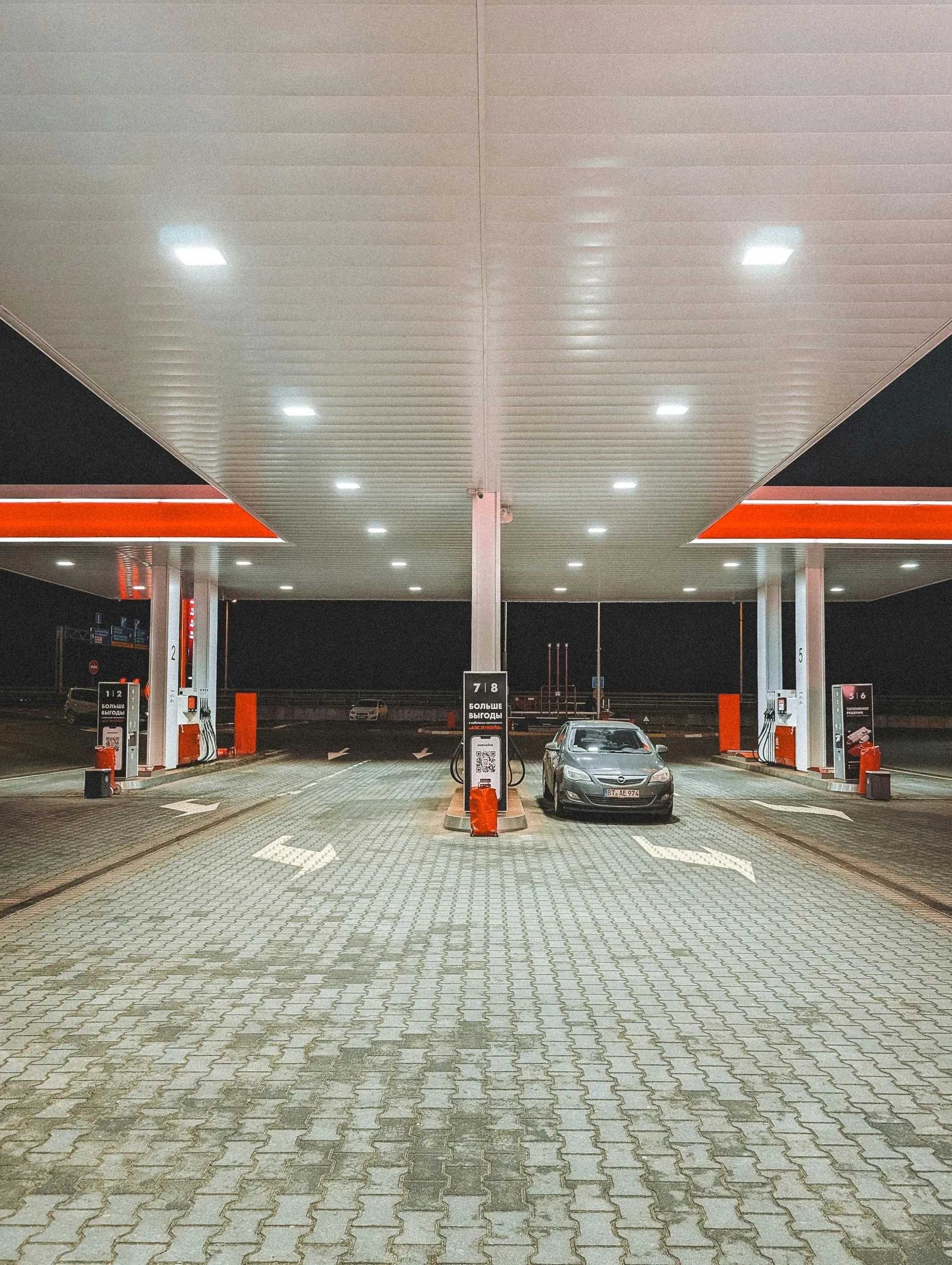
Fuel Station Concrete Services Beyond the Pump Islands
The pump islands are the most visible part of a fuel station concrete project, but they are not the only part that matters.
Drive lanes, entry and exit aprons, parking areas, and canopy columns all require concrete work that holds up under site-specific conditions. We handle the full scope of fuel station concrete services so you are not coordinating multiple contractors for different sections of the same project.
Canopy column pads need to be set at the correct elevation and tied into the surrounding slab properly. Entry and exit aprons take significant abuse from turning vehicles and have to transition correctly from the public street. Parking areas at fuel stations deal with the same fuel exposure as the pump zones and need to be sealed accordingly.
Commercial gas station concrete done as a complete scope, rather than pieced together, produces better results. The transitions between areas are smoother, the drainage plan is consistent, and the reinforcement strategy makes sense across the whole site.
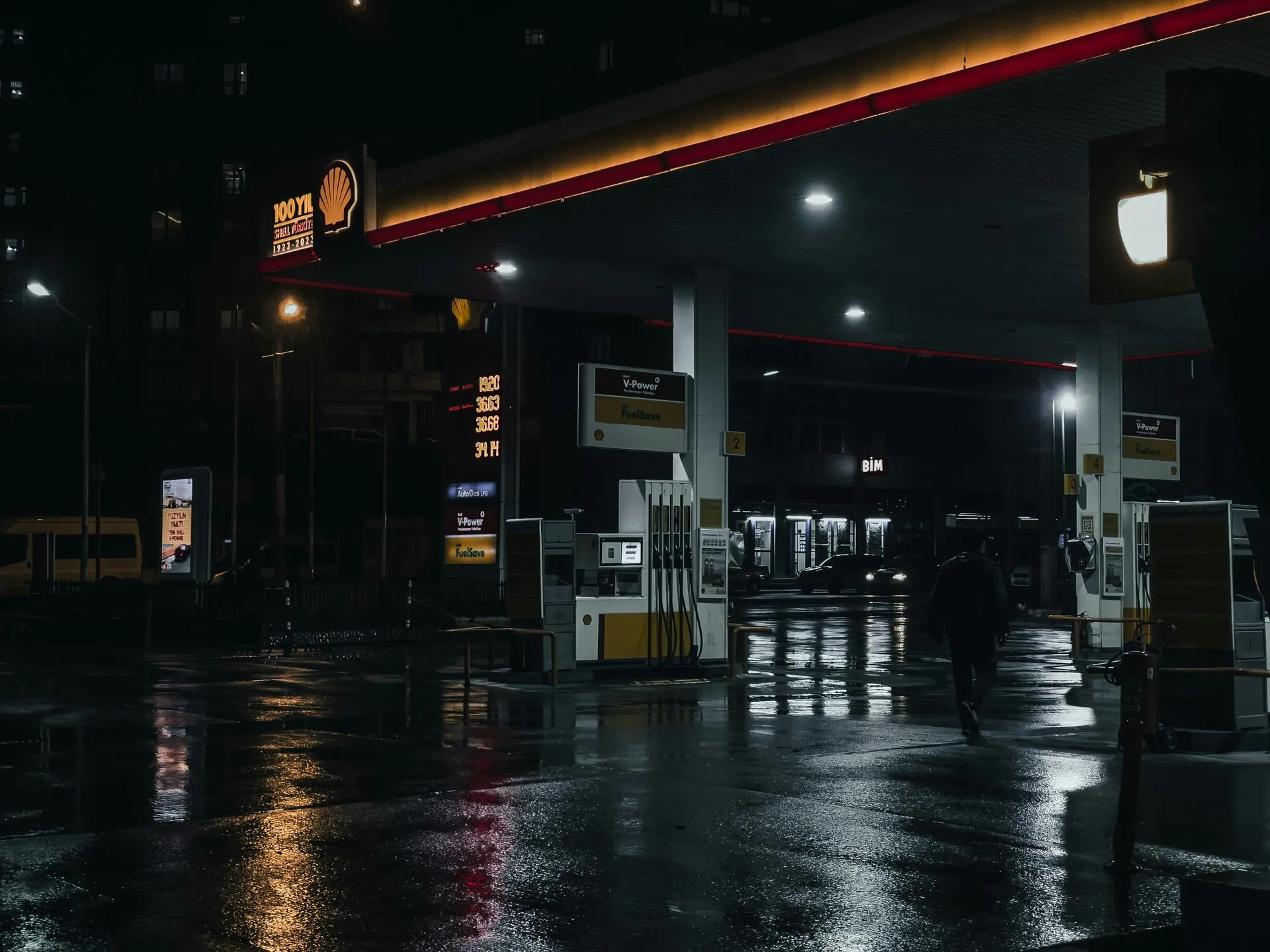
Cracked Gas Station Concrete Repair and Leveling
Fuel station surfaces that were not built correctly show it fast. Cracked gas station concrete repair is something we handle regularly, and the causes are almost always the same: inadequate base preparation, insufficient reinforcement, or a sealer that was not appropriate for fuel exposure.
Surface cracks that have not shifted vertically and have an intact base beneath them can often be cleaned, filled, and sealed effectively. This buys additional service life without full replacement. When cracks have shifted, when sections have sunk, or when the base has clearly failed beneath a section, repair is a short-term answer at best.
Fuel station concrete leveling addresses sections that have settled below the surrounding surface. A sunken section at a pump island or drive lane is a trip hazard and a drainage problem. Depending on the cause and the extent of the settlement, leveling may be possible through slab lifting, or the section may need to come out and be rebuilt with a proper base.
This is usually where people run into problems: they patch the surface without addressing what caused the damage. A few seasons later, the same section is failing again. We look at the cause before we recommend a fix.
Affordable gas station concrete services do not mean doing less. It means doing the right scope of work correctly so you are not back to square one in two years.
Gas Station Construction Cost and What Drives It
Gas station construction cost for the concrete scope depends on several factors. Site size, the number of pump islands, the extent of drive lane and parking area work, drainage requirements, existing site conditions, and whether any repair or demolition of existing concrete is needed.
New concrete gas station construction on a prepared site is a different scope than a renovation project where existing concrete has to come out first. We assess both scenarios before quoting. What we give you is a real number based on what the job actually requires.
Gas station concrete contractors who quote low without accounting for base preparation, proper reinforcement, or chemical-resistant sealing are setting you up for early failure. Ask what the quote includes. The details matter on this kind of work more than most.
We provide free estimates for all gas station concrete work. We come out, look at the site, understand the scope, and put together a clear breakdown of what the project involves and what it costs. No vague figures. No adjustments after the fact.
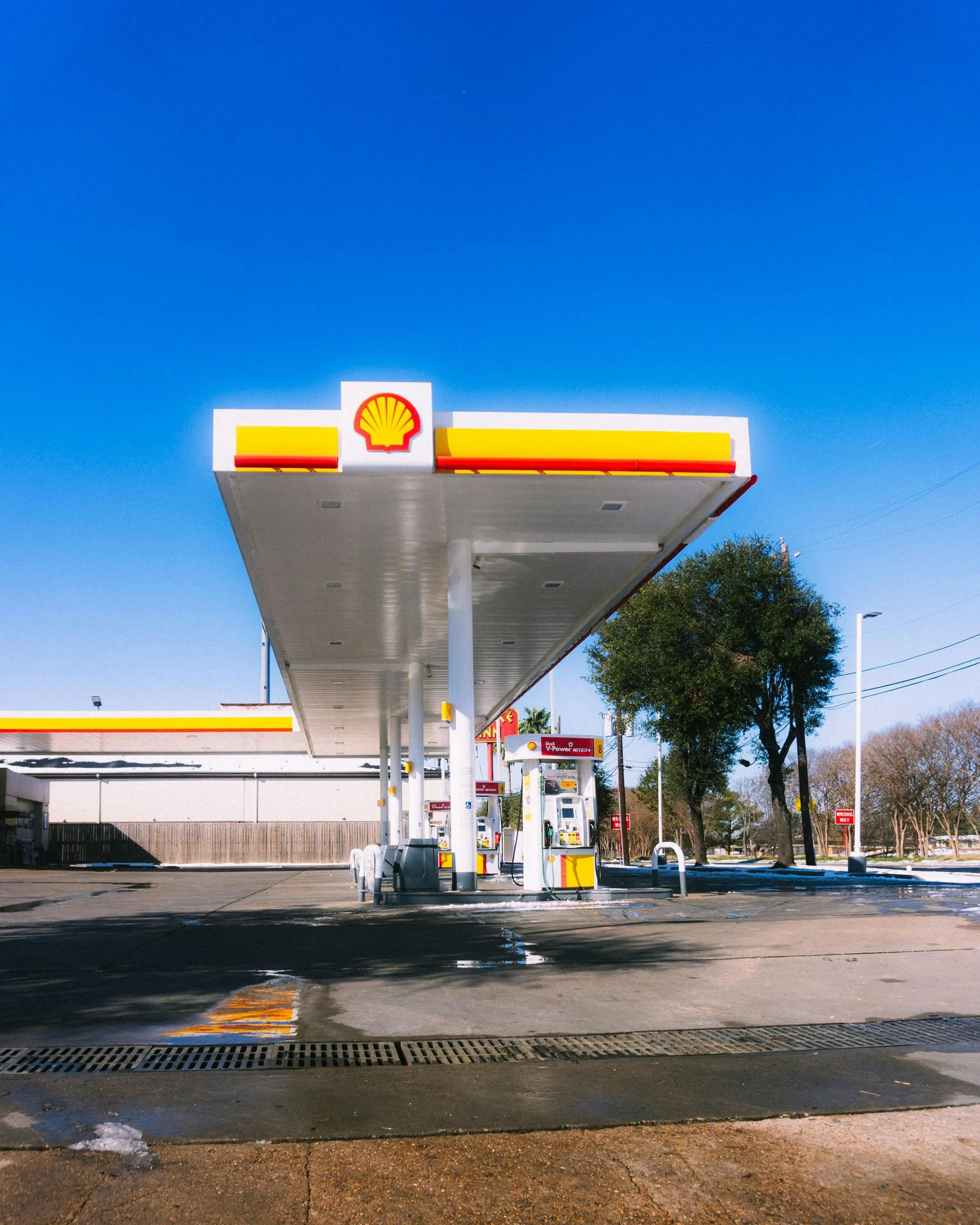
Working With a Concrete Contractor Near You for Fuel Station Projects
Fuel station projects require a concrete contractor with commercial experience. The specifications, the site coordination, the drainage requirements, and the material choices are not the same as residential work. You want someone who has been on commercial jobs and understands what is required.
If you are searching for a concrete contractor near me for a gas station project in the Quad Cities area, we are worth a conversation. We serve Bettendorf, Davenport, Eldridge, LeClaire, Muscatine, DeWitt, Clinton, Blue Grass, and surrounding communities in Iowa and Illinois.
Todd runs a hands-on operation. He is involved in commercial jobs from the estimate through completion. You are not dealing with a sales team that hands the work off to a crew you have never met.
Frequently Asked Questions
-
Fuel spills are the main factor. Petroleum products break down unsealed or improperly sealed concrete from the inside over time. Add heavy vehicle loads and freeze-thaw cycles, and surfaces that were not built to spec deteriorate faster than standard commercial concrete. The fix is in the build, not the repair.
-
Fuel station concrete requires a mix designed for chemical resistance and durability under heavy load. The specific design depends on site conditions and use, but the base preparation, reinforcement, and sealer are as important as the mix itself. We spec each project based on what the site actually demands.
-
Pump islands take concentrated vehicle contact, repeated equipment loading from fuel deliveries, and direct fuel exposure. They need to be set at a precise elevation, properly formed and reinforced, and sealed with a product that holds up to chemical exposure. A standard residential slab spec is not appropriate here.
-
It depends on the cause and extent of the damage. Surface cracks with a solid base can often be repaired effectively. Cracks caused by base failure or significant settlement usually require section replacement to fix properly. We assess the actual condition and tell you honestly which situation you are dealing with.
-
Leveling addresses sections of the slab that have settled below surrounding surfaces. Depending on the cause and severity, it may be possible to lift and stabilize the existing section. When the base has failed significantly, removal and replacement with proper base reconstruction is the more durable fix.
-
Size of the site, number of pump islands, drive lane and parking area square footage, drainage requirements, and whether demolition of existing concrete is needed all factor in. We give free estimates that break down the scope clearly before any work starts.
-
We handle the full scope. Pump islands, drive lanes, entry and exit aprons, parking areas, canopy column pads, and drainage. Keeping the concrete work under one contractor produces better results and simpler coordination.
-
Call us at 563-607-7344 or reach out through our website. We come out, look at the site, and give you a clear quote at no cost. No pressure, no obligation.
Ready to Talk About Your Project?
Muddy Rivers Concrete serves commercial properties throughout the Quad Cities and surrounding region. If you need concrete gas station construction, repair, or fuel station concrete services, call us at 563-607-7344. Free estimates, honest scope, work that holds up.
CONTACT US